
A Hotel's Sonic Identity: When Music Is the Sixth Sense of a Brand
Music in a hotel is not decoration: it is a brand decision that directly affects dwell time, guest spending, and the perceived quality of the space.
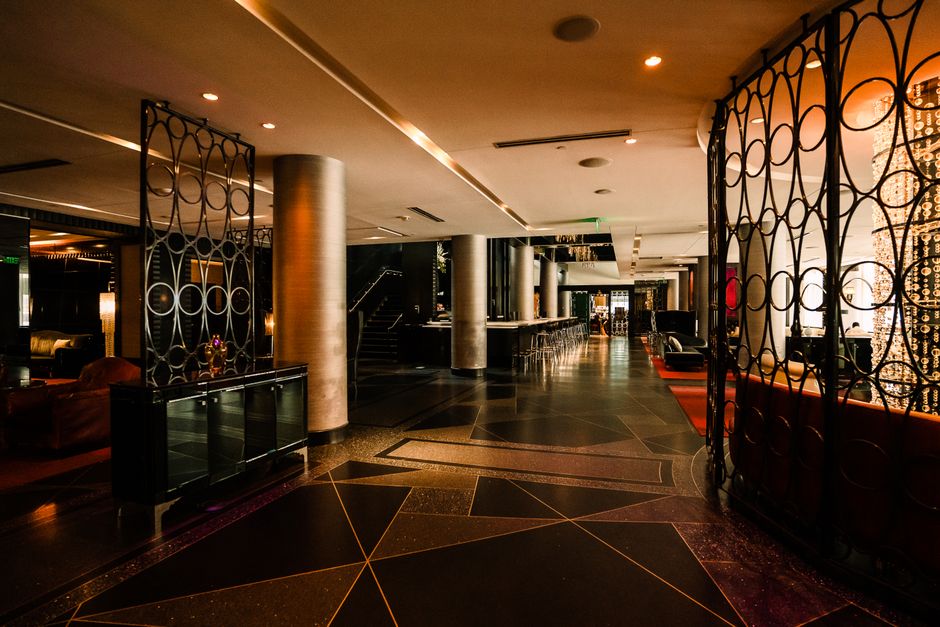
The lobby no one remembers, the music everyone feels
Some hotels look identical: marble floors, soft lighting, uniformed staff. And yet, certain ones are remembered for something that appears in no architecture catalog. There is a sound, an auditory texture, that stays imprinted in a guest's memory long after checkout. That sound is not accidental. It is a brand decision.
In the hotel industry, where visual competition has reached near parity — everyone has well-photographed rooms, design-forward lobbies, and polished social media — sonic identity emerges as one of the last truly differentiating territories. And the evidence behind that claim is no longer intuitive: it is empirical.
What the numbers say
A field experiment published in 2024 in the journal Behavioral Sciences produced one of the most cited findings of the latest academic cycle in hospitality: diners exposed to slow-tempo music stayed an average of 80.3 minutes, compared to 57.3 minutes for those who heard fast music. That is 40.2% more time in the space. And more time, in a hotel, translates directly into more bar consumption, more room service orders, and greater use of paid amenities.
The research does not stop there. A paper published in the International Journal of Hospitality Management found that slow-tempo music with pleasant harmonics increases dwell time in hotel lobbies by up to 18%, while also contributing to significantly higher satisfaction scores in post-stay surveys. The Center for Hospitality Research at Cornell, for its part, confirms that ambient music at the right tempo and volume directly correlates with higher revenue per available guest in food and beverage areas.
A UNLV study covering 35 hotels in Miami Beach adds another layer: 81.25% of food and beverage outlets in those hotels featured ambient music, and in every case guests reported higher levels of satisfaction and enjoyment in environments where music was present. The absence of music, by contrast, generated feelings of coldness and discomfort.
Experts at the EHL Hospitality School report that well-curated music selections can increase satisfaction scores by up to 20%, with a direct impact on online reviews and repeat visits.
When sound becomes a brand system: the Pan Pacific case
The most documented case of hotel sonic identity in Asia-Pacific belongs to Pan Pacific Hotel Group. Equal Strategy, the region's first sensory branding consultancy, developed an integrated sonic identity program for PPHG that was rolled out across all public areas, food and beverage environments, and in-room experiences throughout the group — becoming the first world-class brand sensory program for a hotel group of its scale in Asia-Pacific.
What was significant about the project was not only its scope. It was the underlying logic: the brief began with the brand's visual language and translated it into a sonic palette that could adapt to each property and each time of day without losing brand coherence. PPHG's sonic identity was built on a downtempo lounge and deep house aesthetic — warm, organic, evocative — positioned at the precise intersection of luxury and modernity. It was not a playlist. It was brand architecture.
Every touchpoint along the guest journey was considered: the phone reservation call, the transfer, the lobby, the restaurant. The result was a cohesive experience that guests could feel without necessarily being able to name.
The sonic signature in global chains: from Auberge to Mercedes-Benz
The study by consultancy amp, titled "The Sound of Luxury," analyzed more than 100 luxury brands across the hotel, automotive, and fashion sectors. One of its main conclusions: brands such as Mercedes-Benz, Miu Miu, and Bottega Veneta differentiate themselves through unexpected and distinctive musical choices, setting themselves apart from industries that have historically relied on generic or library music.
In the luxury hotel world, the amp study identifies a growing trend: the incorporation of natural sounds — birds, water, wind — as part of the sonic identity in wellness environments. Not as casual decoration, but as a strategic positioning decision that communicates authenticity, deceleration, and a connection to the surrounding environment. It is a direct response to what contemporary luxury guests seek: not ostentation, but deep experience.
Bespoke Sound, the sonic identity studio founded by Clay Bassford with clients including Auberge Resorts and Blue Lagoon, operates under a similar logic: music does not set the mood — it shapes the brand experience. An experience that, according to the amp study, led 77% of Mastercard customers to perceive the brand as more trustworthy within the first 12 months of implementing its sonic identity.
The mistake guests do not forget
One finding recurs in hospitality literature with a frequency that should make any director of operations uncomfortable: the wrong music can undo the effect of a million-dollar investment in design.
A case documented by EHL illustrates the problem with precision: a boutique hotel on Manhattan's Upper East Side, featuring elegant marble floors, contemporary art, and an impeccable concierge team, was remembered negatively by its guests. The reason was neither the service nor the design — it was the high-volume electronic music that clashed with the promise of tranquility and refinement that the visual space communicated. Guests rushed through check-in and retreated to their rooms, stating they would not return.
This phenomenon has a technical name in branding literature: sonic incongruence. And in hotels, where the sensory experience is the central promise of the product, sonic incongruence is not a minor detail. It is a breach of contract with the guest.
The principle behind it is simple but powerful: music operates at a preconscious level. Guests do not rationally process what they hear — they feel it. When that feeling contradicts what they see, something does not add up. And even if the guest cannot always articulate why, it shows up in the review.
Sound zoning: the hotel as a musical score
A mid-size hotel operates as a complex sonic ecosystem. Each space has a distinct emotional function and, therefore, requires a different musical approach. The arrival lobby cannot sound like the spa. The breakfast restaurant cannot carry the same atmosphere as the rooftop bar at night.
- Arrival lobby: the first auditory impression occurs before the guest exchanges a single word with staff. Music that communicates welcome without being intrusive. Volume that allows conversation and reduces arrival friction.
- Restaurant and bar: the space with the greatest impact on revenue per guest. Tempo directly affects how long a diner stays — and how much they spend. Musical genre communicates the space's positioning: jazz or culturally inspired music reinforces identity and encourages longer stays.
- Spa and wellness areas: research is consistent here: tempos between 60 and 80 BPM support parasympathetic activation, lower heart rate, and modulate cortisol. Music in this context is therapeutic, not merely ambient.
- Intentional silence zones: deciding where not to play music is a brand decision just as valid as deciding where to play it.
This zoning logic is what distinguishes a strategic music program from a simple playlist. As Equal Strategy notes, high-level sonic identity encompasses both the auditory landscape of each space and the quality of silence in premium environments, as well as how sound transitions between zones within the same building.
Music that goes unnoticed, but defines everything
The paradox of hotel sonic identity is this: when it works well, guests do not mention it. But they feel it. They feel it in the decision to linger a little longer at the bar. In the perception that the service "feels premium." In the photo they take of the lobby because it "has something special." In the review that says "the atmosphere was incredible."
That atmosphere is not magic. It is curation. It is the decision to treat sound with the same rigor applied to selecting a chef or designing a room. It is what separates hotels that look good from hotels that are remembered.
Services like Mystify Radio operate in exactly that territory: not generic playlists, but music programming curated with brand intent, adaptable by zone, by time of day, and by positioning. Because in hospitality, sound is not the background — it is part of the product.
CEO and founder of Mystify Radio. Music curator for 100+ venues across LATAM. Specialist in audio branding and sonic identity.
About PauloWhat people ask us
How does music tempo affect how long guests stay and how much they spend at a hotel?
A 2024 field experiment published in Behavioral Sciences found that diners exposed to slow-tempo music stayed an average of 80.3 minutes, compared to 57.3 minutes for those who heard fast music, a difference of 40.2% more time in the space. A separate paper in the International Journal of Hospitality Management found that slow-tempo music with pleasant harmonics increases dwell time in hotel lobbies by up to 18%. The Cornell Center for Hospitality Research confirms that ambient music at the right tempo and volume directly correlates with higher revenue per available guest in food and beverage areas.
What is sonic incongruence and why is it a problem for hotels?
Sonic incongruence occurs when the music playing in a space contradicts the sensory promise communicated by its design. The article documents a boutique hotel on Manhattan's Upper East Side where high-volume electronic music clashed with its elegant marble floors and refined aesthetic, causing guests to rush through check-in and retreat to their rooms, stating they would not return. Because music operates at a preconscious level, guests may not be able to articulate the problem, but it consistently shows up in negative online reviews.
What is a real-world example of a hotel brand building a full sonic identity program?
Pan Pacific Hotel Group partnered with Equal Strategy, described as Asia-Pacific's first sensory branding consultancy, to develop an integrated sonic identity program rolled out across all public areas, food and beverage environments, and in-room experiences. The program was built on a downtempo lounge and deep house aesthetic and was designed to adapt to each property and time of day without losing brand coherence. It was notable for being the first world-class brand sensory program of its scale for a hotel group in Asia-Pacific, covering every guest touchpoint from the phone reservation call to the lobby and restaurant.
What type of music is recommended for hotel spa and wellness areas, and why?
Research cited in the article is consistent in recommending music with tempos between 60 and 80 BPM for spa and wellness environments. Music in that range supports parasympathetic activation, lowers heart rate, and helps modulate cortisol levels. The article frames this as therapeutic programming, not merely ambient sound, making it a strategic health and positioning decision rather than a casual choice.
How much can well-curated music improve guest satisfaction scores and online reviews?
Experts at EHL Hospitality School report that well-curated music selections can increase satisfaction scores by up to 20%, with a direct impact on online reviews and repeat visits. A UNLV study covering 35 hotels in Miami Beach also found that guests reported higher levels of satisfaction and enjoyment in every outlet where music was present, while the absence of music generated feelings of coldness and discomfort.
Why do luxury brands use distinctive or unexpected music instead of generic background tracks?
According to the amp consultancy study titled The Sound of Luxury, which analyzed more than 100 luxury brands across hotels, automotive, and fashion, brands like Mercedes-Benz, Miu Miu, and Bottega Veneta differentiate themselves precisely through unexpected and distinctive musical choices. In luxury hotels, the study also identifies a growing trend of incorporating natural sounds such as birds, water, and wind in wellness environments as a strategic positioning decision that communicates authenticity and a connection to the surrounding environment. Bespoke Sound founder Clay Bassford, whose clients include Auberge Resorts, operates under the same logic: music does not set the mood, it shapes the brand experience.
Get the next article
Once every two weeks. No spam, only what is worth reading.