
The Invisible Orchestra: Why Music Conducts Your Multisensory Experience
Music does not work alone in a commercial space. When it plays in harmony with scent, light, and design, it multiplies the experience. When it clashes, it destroys it.
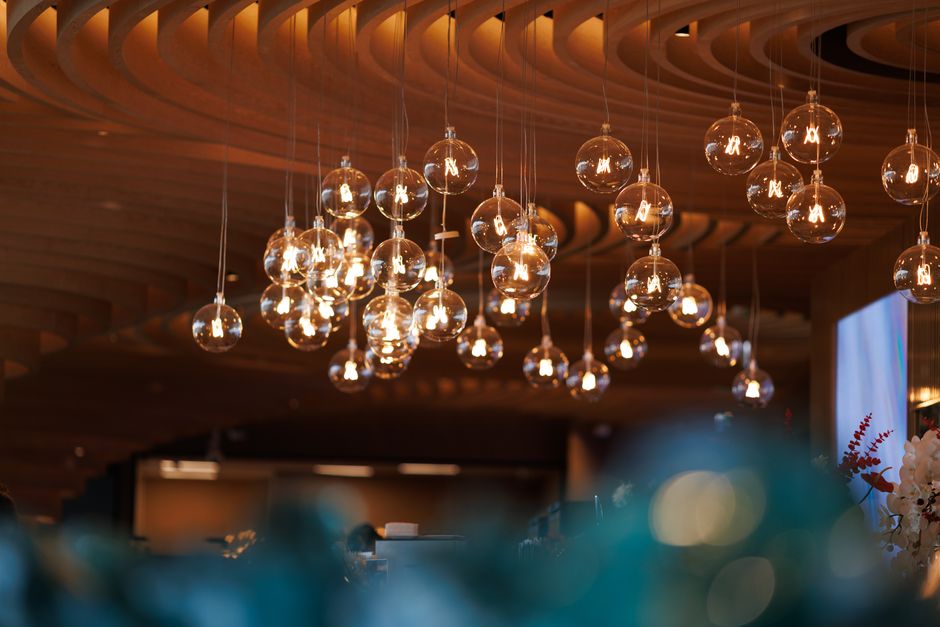
When a space wraps around you and you can't explain why
You walk into a restaurant. The light is low but warm. The scent of wood and spices reaches you before the menu does. The music — minimalist jazz, no vocals — floats at a volume that never forces you to raise your voice. You sit down, order, and without realizing it, ninety minutes have passed. It wasn't the food. It was everything.
That sense of wholeness is the result of a strategic decision the smartest brands have already made: music does not live alone in a space. It lives alongside scent, lighting, the texture of materials, the rhythm of service. And when all of those elements speak the same language, the experience becomes something a customer remembers without being able to pinpoint exactly what caught them.
What is studied today under the name of "multisensory marketing" confirms what the best hospitality operators had been sensing for decades. Visual design, music, and ambient scent jointly influence customer emotions and their perception of service quality, and multisensory congruence consistently emerges as the central mechanism driving aesthetic pleasure and experiential value.
Congruence is the key: when everything sounds like one
Congruence is the technical term. In practice, it means something simple: that what the customer hears, smells, and sees all tell the same story. When that happens, the effects multiply. When it doesn't, they cancel each other out — or worse, they contradict.
A landmark study on retail environments demonstrated this with precision: congruent multisensory cues improve customer satisfaction and increase impulse purchase behavior, and the specific pairing of music and scent can significantly influence spending.
The problem is that most businesses design each sense separately. The manager picks the music. The operations director decides on the scent. The architect designs the lighting. No one coordinates. The result is a space where tropical music clashes with Nordic decor and a vanilla fragrance, and the customer's brain processes a contradictory signal that — without them ever rationalizing it — produces a sense of unease.
The evidence is clear: ambient stimuli should not be considered in isolation, since it is the total configuration of cues that shapes consumer responses. Put another way: a great playlist cannot rescue a space that is poorly designed on a sensory level, just as an excellent scent cannot compensate for dissonant music.
Hotels that already know: the case for multisensory luxury
The luxury hotel industry has been ahead of this for years. The Westin chain and its iconic White Tea fragrance represent the canonical case in multisensory hospitality, while Marriott's lobby scent program demonstrates how to scale this approach across multiple properties.
But the most complex example comes from Fairmont Singapore, where a ten-zone music program was designed alongside a scent identity for the restaurant Prego — a Sicilian orange fragrance activated through the HVAC system to create an arrival experience like stepping into an Italian garden. Prego is considered the first Italian restaurant in Singapore to deploy a custom arrival scent as a deliberate brand experience.
Note the detail: the music and the scent were not two parallel projects. They were a single brief. Many programs combine both — as in the case of Naumi Hotel, Pan Pacific Hotel Group, and restaurant JAG — so that what guests hear and what they smell originates from the same idea.
Restaurants: the table as a full-sensory experience
In the food and beverage world, the most recent research goes further than simple ambiance. The "Awaken Your Senses" event, developed by the Centre for Multisensory Marketing at BI Norwegian Business School alongside chef Pablo Naranjo at Le15 Cafe in Mumbai, structured each course around a deliberate sensory activation. The result was not merely auditory accompaniment, but a multisensory fusion that diners described as an intensification of both flavor perception and emotional engagement — a demonstration of experience design principles: the intentional selection and orchestration of sensory cues to shape perception.
What does that mean for a restaurant that does not operate at that level of sophistication? The same thing. Use multisensory design — music, presentation aesthetics, and scent — to enhance flavor perception and build brand narrative. A well-orchestrated sensory experience can elevate customer satisfaction and sustain a premium positioning.
The numbers back up that logic: restaurants that play classical music report customers spending 23% more per visit compared to establishments using contemporary pop. It is not magic. It is that the sound of a space communicates a standard that the customer, unconsciously, decides to validate with their spending.
The cafe as a lab: what ST. ALi proved
The case of Australian cafe ST. ALi is one of the most documented in terms of measurable return on investment in sonic identity. ST. ALi invested in a full sonic branding program — including an audio logo and in-store music strategy — achieving 73% brand recall in blind audio tests and a 31% increase in customer dwell time at its cafes.
How did it get there? It developed a comprehensive in-store sonic branding program: music with jazz and indie influences that reflects the culture of specialty coffee, a subtle audio logo in ordering areas, and playlists designed around different times of day. The result was that 67% of customers cited the atmosphere — including the audio — as the venue's main draw.
The key point: ST. ALi did not choose random music that "sounded good." It chose music that communicated what it was: craft-driven, independent, deliberate. Music was a brand argument, not decoration.
Cafes that use strategic ambient soundscapes report an average visit duration 18% longer compared to venues with no audio design. More time at the table almost always means more spending and a better-remembered experience.
The mistake that keeps repeating: senses without a conductor
The most common trap in commercial spaces is not choosing the wrong music. It is choosing it without considering everything else. A recent neurological study on fashion retail environments confirmed that sensory engagement through lighting, music, scent, and tactile interactions significantly impacts consumer perception and purchase behavior, and that the atmosphere of a space influences emotions, cognitive responses, and purchase intentions.
Translated: customers do not process each stimulus separately. They process all of them at once, as a single signal. If that signal is coherent, it reinforces the perception of quality and the intention to buy. If there is noise between the channels, the system breaks down.
The practical implication is direct: before curating the music for your space, you need to know what story your other senses are already telling. What scent is in the air? What does the lighting say? What do the materials communicate? Music must respond to those questions, not ignore them.
- Narrative coherence: Music must speak the same aesthetic language as the visual design of the space.
- Tempo coherence: Musical rhythm must match the desired operational pace — unhurried for brunch, efficient for the lunch rush.
- Positioning coherence: If your brand is premium, your music cannot be generic, even if it sounds "harmless."
- Brand coherence over time: A space that sounds different every week builds no identity — it only fills the silence.
Music as the conductor
In a well-designed multisensory space, no single sense operates on its own. But music has a property that scent and light do not: it is the only sensory signal perceived with its own narrative structure. It has a beginning, a development, and an end. It carries recognizable emotion. It has the ability to anchor memories.
Music shapes dwell time — how long someone stays rather than glancing around and leaving — and dwell time is one of the few variables that retail has always known correlates with spending per visit. It also shapes memory: a customer forgets most of what they saw in a space within a day, but a sound repeated consistently across visits builds the kind of recognition that a logo takes years to earn.
That is why music holds the role of conductor in a space's sensory orchestra. Not because it is more important than scent or light, but because it sets the tempo. It is the element that gives rhythm to the entire experience.
At Mystify Radio we design custom radio stations for commercial spaces across LATAM, with specialized human curation and an intelligent DJ that adapts programming to the different moments of the day. Because the music that builds a brand is not the music playing in the background: it is the music conducting everything else.
CEO and founder of Mystify Radio. Music curator for 100+ venues across LATAM. Specialist in audio branding and sonic identity.
About PauloWhat people ask us
What is multisensory congruence and why does it matter in a commercial space?
Multisensory congruence means that everything a customer hears, smells, and sees tells the same story. According to the article, congruent multisensory cues improve customer satisfaction and increase impulse purchase behavior. When cues clash instead of aligning, the customer's brain processes a contradictory signal that produces a sense of unease, even if they never consciously identify the reason.
How much more do customers spend when music is chosen strategically?
The article cites that restaurants playing classical music report customers spending 23% more per visit compared to establishments using contemporary pop. The explanation offered is not that the music is inherently superior, but that the sound of a space communicates a standard that customers unconsciously validate with their spending.
What results did ST. ALi achieve with its sonic branding program?
Australian cafe ST. ALi invested in a full sonic branding program that achieved 73% brand recall in blind audio tests and a 31% increase in customer dwell time. The program included jazz and indie-influenced playlists, an audio logo in ordering areas, and time-of-day programming. As a result, 67% of customers cited the atmosphere, including the audio, as the venue's main draw.
How have luxury hotels applied multisensory design across their properties?
The article points to several examples from the hospitality sector. The Westin chain and its White Tea fragrance represent the canonical case, while Marriott scaled a lobby scent program across multiple properties. At Fairmont Singapore, a ten-zone music program was designed alongside a custom Sicilian orange fragrance for restaurant Prego, with both music and scent developed as a single brief rather than two separate projects.
What is the most common mistake businesses make when designing the sensory environment of their space?
According to the article, the most common trap is not choosing the wrong music but choosing it without considering everything else in the space. In most businesses, the manager picks the music, the operations director decides on the scent, and the architect designs the lighting, with no one coordinating between them. The article stresses that customers do not process each stimulus separately but as a single signal, so incoherence between channels breaks the entire experience.
Why does music hold a unique role compared to scent and light in a sensory environment?
The article argues that music is the only sensory signal perceived with its own narrative structure, as it has a beginning, a development, and an end, carries recognizable emotion, and can anchor memories. It also directly shapes dwell time, which the article identifies as one of the variables that most reliably correlates with spending per visit. For these reasons, the article describes music as the conductor of the sensory orchestra, the element that sets the tempo for the entire experience.
Get the next article
Once every two weeks. No spam, only what is worth reading.