
The Museum That Sounds: How Musical Ambiance Transforms the Experience in Galleries and Cultural Spaces
Music in museums and galleries is not decoration: it is an invisible layer that regulates dwell time, emotion, and visitor memory.
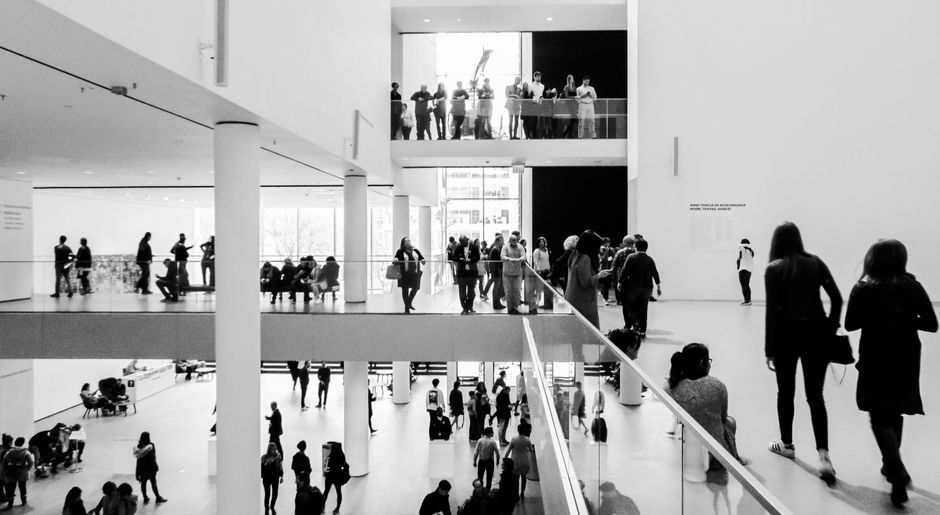
Silence is also a sonic decision
For decades, silence was the default state of museums and galleries. It was assumed that visual art demanded acoustic stillness — that any sound competes with the work hanging on the wall. That logic holds some truth, but it also carries an enormous cost that few institutions have ever calculated: the visitor who never stops, who moves through the halls as if following an escape route, and who leaves without having built any emotional connection to what they saw.
The data from the British Museum speaks clearly to this. Evaluations of its permanent galleries reveal that the average visitor dwell time is remarkably low — sometimes just a few minutes — and that most people stop in front of only a small number of objects in each room. The problem is not always the visual curation. More often than not, it is the complete sensory environment.
Ambient music, designed with intention, is one of the most effective levers for changing that behavior. And cultural spaces are starting to take it seriously.
What science knows about sound and dwell time
The academic evidence on music and consumer behavior does not come exclusively from retail or dining. Its principles apply directly to any space where people make decisions about how long to stay and how deeply to engage with the experience.
One of the most cited studies on the subject is the HUI Research work published in 2017, which analyzed 1.8 million sales transactions and surveyed 2,101 customers across 16 restaurants over five months. Its finding was clear: music that fits a brand's identity increases revenue by 9.1% compared to random popular music. The underlying logic — congruence between sound and space — is exactly the same logic that operates inside an art gallery.
A 2024 study published in Frontiers in Psychology examined the mechanism more closely: slow-tempo music encouraged visitors to stay longer, which translated into higher total spending, particularly on beverages and desserts. In a museum or gallery with an integrated cafe or bookstore, that effect transfers directly.
The principle of musical congruence also has backing in recent research published in Marketing Letters: according to the musical congruence hypothesis, music activates relevant knowledge structures that predispose consumers toward products that align with what they are hearing. In terms of cultural experience, this means that a visitor listening to a soundscape coherent with the exhibition they are viewing is more willing to engage with it emotionally.
The project that won a Clio: when sound follows the visitor room by room
In 2025, one of the year's most awarded sonic branding projects was designed specifically for a cultural space. The studio WithFeeling was commissioned to create an institutional sound identity, with an approach that went far beyond an audio logo. The brief was not for a logo but for a system. The sound identity accompanied the visitor's journey: contemplative textures in the historical galleries, more rhythmic elements in the outdoor sections, signature moments placed at the threshold of each chapter. Sound treated the space the same way architecture treats light: as something that shapes the experience without ever asking for attention itself.
The project won Gold at the International Sound Awards 2025, Silver at the Creativepool Awards 2025, and Bronze at the Clio Music Awards 2026 — establishing itself as a reference point for what it means to design sound for cultural institutions with strategic rigor.
The underlying lesson, according to the creative team itself: the key is restraint. Cultural institutions tend to use sounds that announce themselves. The most common mistake is overexposure — music that is too present and competes with the works on display instead of framing them.
Three principles for designing sound in a cultural space
Unlike a restaurant or a retail store, a museum or gallery has particular acoustic requirements. The ambiance must be especially discreet, zoned, and capable of modulating emotion without directing it in an obvious way. These are the three principles that emerge from the research and real-world cases:
- Thematic congruence, not generic selection. The musical choices must respond to the content of the exhibition, not to general preferences. A survey of 20th-century Latin American art calls for a different sonic universe than an exhibition of contemporary Scandinavian photography. Generic or "neutral ambient" music does not build experience: it dilutes it.
- Zoning by pace of movement. Entry halls and transition spaces can sustain a higher level of sonic activation. Rooms featuring the main works need the least intervention. This gradation mirrors what major international museums do with light: using intensity as a guide for attention.
- Deliberate tempo. Slow-tempo music encourages visitors to linger longer, while faster tempo moves people through more quickly. In both cases, music directly affects measurable business outcomes. A gallery with a cafe will want visitors to stay longer. A high-demand temporary exhibition may need the opposite during peak hours.
The market is already paying attention: commercial ambiance grows at a steady pace
The trend is not just academic. The global market for commercial background music reflects the shift. The global commercial background music market is estimated to grow from USD 1.92 billion in 2025 to USD 2.78 billion in 2031, at a compound annual growth rate of 6.35%.
The engine of that growth is not just mass retail. The rise is also driven by growing adoption in healthcare facilities, hotels, and connected fitness spaces, which now consider music a central part of the service experience rather than a discretionary add-on. Museums, galleries, and cultural centers are part of that same wave — spaces that historically overlooked the sonic layer and that today see in it a real opportunity for differentiation.
The evidence is especially compelling when analyzing the effect of sonic incongruence: playing random popular music that does not fit a brand's identity decreases sales by 4.3% compared to playing no music at all. In other words, intentional silence is better than the wrong sound. But the right sound is, by far, the best option available.
From the canvas to the room: music as curatorial extension
The question every museum and gallery should be asking is not "do we play music or not?" but "what do we want visitors to feel when they leave, and how does sound contribute to that?"
When musical ambiance is well designed, visitors do not consciously notice it — but the experience feels deeper, more memorable, more specific to that particular space. Diners — and by extension, visitors to any experiential space — who are exposed to music that fits the atmosphere of the venue report greater satisfaction and are more likely to describe the experience as enjoyable and memorable. That alignment between sound and environment creates an emotional resonance that builds loyalty and repeat visits.
For museums and galleries looking to convert the occasional visitor into a returning one, that is exactly the mechanism they need to activate. It is no coincidence that the world's most visited cultural institutions — from the MoMA to the Met — treat the complete sensory experience as part of their value proposition.
At Mystify Radio, we work precisely at that intersection: between the positioning of a space and the sound that makes it coherent. For cultural spaces that want to design that layer with the same rigor they bring to their visual curation, the conversation starts with understanding that sound does not compete with art — it completes it.
CEO and founder of Mystify Radio. Music curator for 100+ venues across LATAM. Specialist in audio branding and sonic identity.
About PauloWhat people ask us
How does ambient music affect how long visitors stay in a museum or gallery?
Research cited in the article shows that slow-tempo music encourages visitors to linger longer, while faster tempo moves people through more quickly. A 2024 study published in Frontiers in Psychology confirmed this effect and found that longer dwell times translated into higher total spending, particularly in spaces with integrated cafes or bookstores. The article also notes that the British Museum's own evaluations reveal visitors spend remarkably little time in front of most objects, a problem partially rooted in the sensory environment rather than visual curation alone.
What happens when a museum or gallery plays music that does not fit its brand or exhibition?
According to the article, playing random popular music that does not align with a space's identity decreases sales by 4.3% compared to playing no music at all. This means intentional silence is actually a better option than the wrong sound. The article frames this as the principle of sonic incongruence, and uses it to argue that musical selection must respond directly to the content of the exhibition rather than general preferences.
What is an example of a successful sound identity project designed for a cultural institution?
The article highlights a 2025 project by the studio WithFeeling, commissioned to create an institutional sound identity for a cultural space. The system was designed to accompany the visitor's journey room by room, with contemplative textures in historical galleries, more rhythmic elements in outdoor sections, and signature moments at each chapter threshold. The project won Gold at the International Sound Awards 2025, Silver at the Creativepool Awards 2025, and Bronze at the Clio Music Awards 2026.
What are the three principles for designing sound in a museum or gallery?
The article outlines three principles drawn from research and real-world cases. First, thematic congruence: music must respond to the specific content of the exhibition, not generic preferences. Second, zoning by pace of movement: entry halls can sustain more sonic activation, while rooms featuring main works need the least intervention. Third, deliberate tempo: slow tempo encourages lingering, while faster tempo accelerates movement, and the choice should align with the space's specific business goals.
How large is the commercial background music market and what is driving its growth?
The article estimates the global commercial background music market will grow from USD 1.92 billion in 2025 to USD 2.78 billion in 2031, at a compound annual growth rate of 6.35%. Growth is driven not only by mass retail but also by healthcare facilities, hotels, connected fitness spaces, and cultural institutions that now treat music as a central part of the service experience rather than a discretionary add-on.
Why is the most common mistake in museum sound design considered overexposure?
According to the creative team behind the award-winning WithFeeling project, the key principle in cultural sound design is restraint. The most common mistake is music that is too present and ends up competing with the works on display rather than framing them. The article describes the ideal approach as sound that shapes the experience without ever asking for attention itself, in the same way architecture uses light.
Get the next article
Once every two weeks. No spam, only what is worth reading.